
Cat and Dog Poison Prevention: Protecting Your Pet at Home and Beyond
March is Poison Prevention Month, the perfect time to review how to keep your pets safe from hidden household dangers. Cat and dog poison prevention is one of the most important steps you can take to protect your pet’s health, as many everyday items can quickly become life-threatening.
At Mount Pleasant Animal Hospital, we regularly treat preventable toxin exposures. The good news? Most poisoning cases can be avoided with awareness and preparation. This blog is designed to help Lowcountry pet parents prevent emergencies before they happen.
Cat and Dog Poison Prevention: Why It Matters
Pets explore the world with their noses and mouths. Curious dogs may chew on medications or food scraps, while cats may nibble on houseplants or knock over essential oils.
Without proper cat and dog poison prevention, pets are at risk for:
- Vomiting and diarrhea
- Seizures or tremors
- Organ failure (liver or kidneys)
- Internal bleeding
- Life-threatening emergencies
Even small amounts of certain toxins can cause serious harm. Acting quickly can make a critical difference in outcome.
Cat and Dog Poison Prevention: Common Household Toxins
Many toxins are found in everyday Lowcountry homes. Knowing what to look for is the first step in prevention.
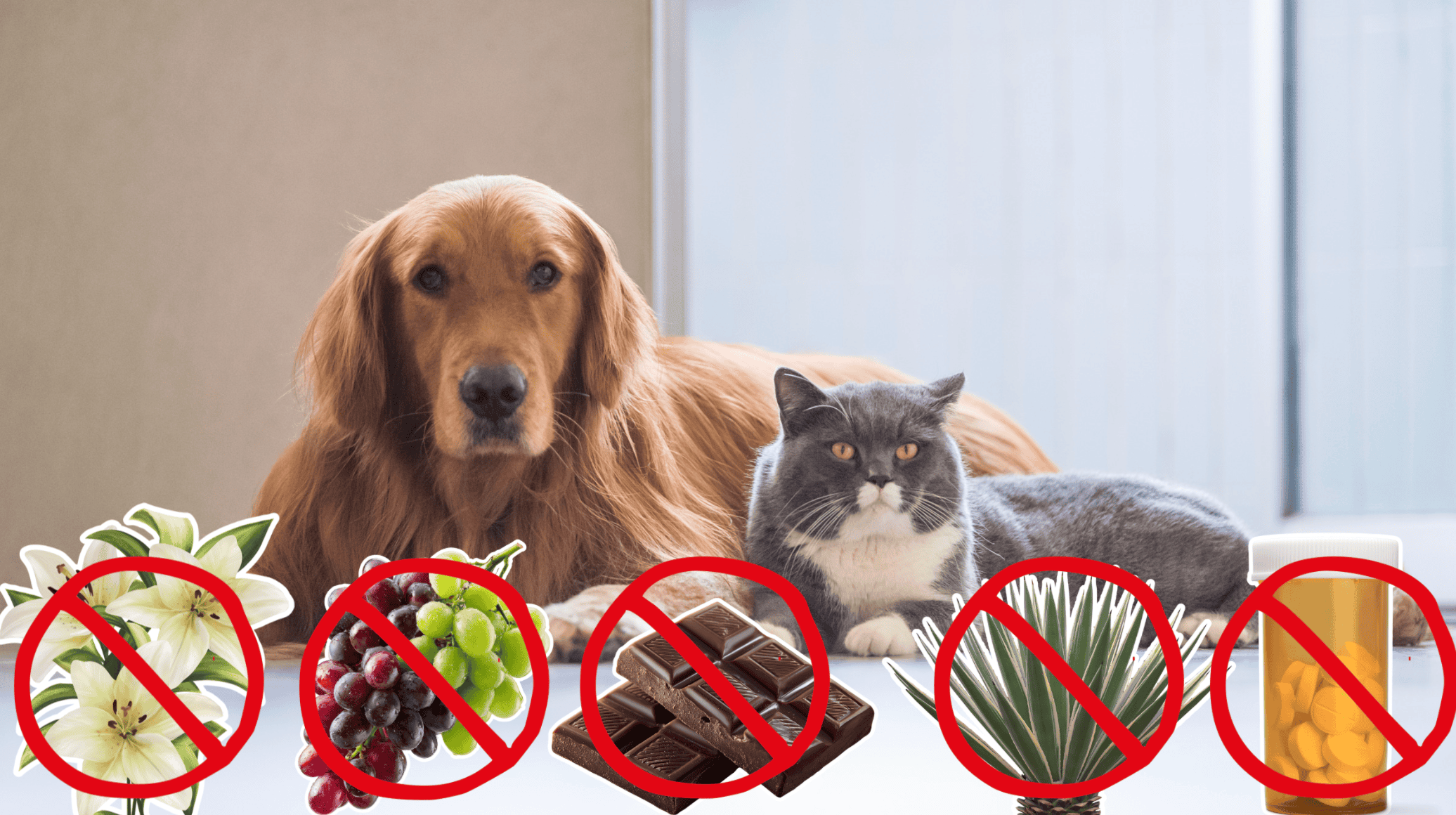
Human Medications
- Ibuprofen and acetaminophen
- Antidepressants
- Blood pressure medications
- Sleep aids
Even a single pill can be dangerous to pets. Always keep medications secured in closed cabinets and never leave pill bottles on countertops or nightstands.
Toxic Foods
- Grapes and raisins
- Chocolate
- Xylitol (found in sugar-free gum and some peanut butters)
- Onions and garlic
Holiday gatherings, backyard cookouts, and everyday snacking can all increase the risk of accidental ingestion.
Plants and Yard Products
- Lilies (extremely toxic to cats)
- Sago palms
- Fertilizers and weed killers
- Cocoa mulch
Spring gardening season in the Lowcountry often brings an increase in plant- and lawn-related exposures.
For even more information on household hazards, watch this short video:
Cat and Dog Poison Prevention: Signs of Toxic Exposure
If your pet has been exposed to a toxin, symptoms may appear quickly or develop over several hours.
Watch for:
- Sudden vomiting or diarrhea
- Excessive drooling
- Lethargy or weakness
- Tremors or seizures
- Pale gums
- Difficulty breathing
If you suspect poisoning, do not wait. Immediate veterinary care can save your pet’s life.
For 24/7 guidance, you can also contact the ASPCA Animal Poison Control Center at (888) 426-4435.
Cat and Dog Poison Prevention: Practical Safety Tips
Prevention starts with small daily habits:
- Store medications in closed cabinets, not countertops.
- Keep trash cans secured with tight-fitting lids.
- Check ingredient labels for xylitol before sharing peanut butter.
- Research plants before bringing them into your home.
- Store lawn chemicals in sealed containers out of reach.
- Keep purses and backpacks (often containing medications) off the floor.
If you’re unsure whether something is safe, ask our veterinary team before offering it to your pet.
Cat and Dog Poison Prevention: What To Do in an Emergency
If you believe your pet has ingested something toxic:
- Stay calm.
- Remove access to the substance.
- Do not induce vomiting unless directed by a veterinarian.
- Call your veterinarian immediately.
Bring packaging or a photo of the product with you to the clinic if possible. Quick identification helps guide treatment.
Cat and Dog Poison Prevention: Your Partner in Pet Safety
At Mount Pleasant Animal Hospital, we’re committed to helping Lowcountry pets stay safe year-round. From preventive guidance to emergency care, our team is here when you need us most.
If you have questions about cat and dog poison prevention or want to review your home safety plan, call us at (843) 884-4921 or request an appointment online.
Mount Pleasant Animal Hospital is proud to be part of Animal Hospitals of the Lowcountry, a family-owned network including:
- Mount Pleasant Animal Hospital – South Mount Pleasant (Coleman Blvd & Old Village)
- Shuler Veterinary Clinic – Central Mount Pleasant (Town Center)
- Safe Harbor Animal Hospital – North Mount Pleasant (Hwy 41)
Together, we’re helping Lowcountry pets live safer, healthier lives — this Poison Prevention Month and beyond.